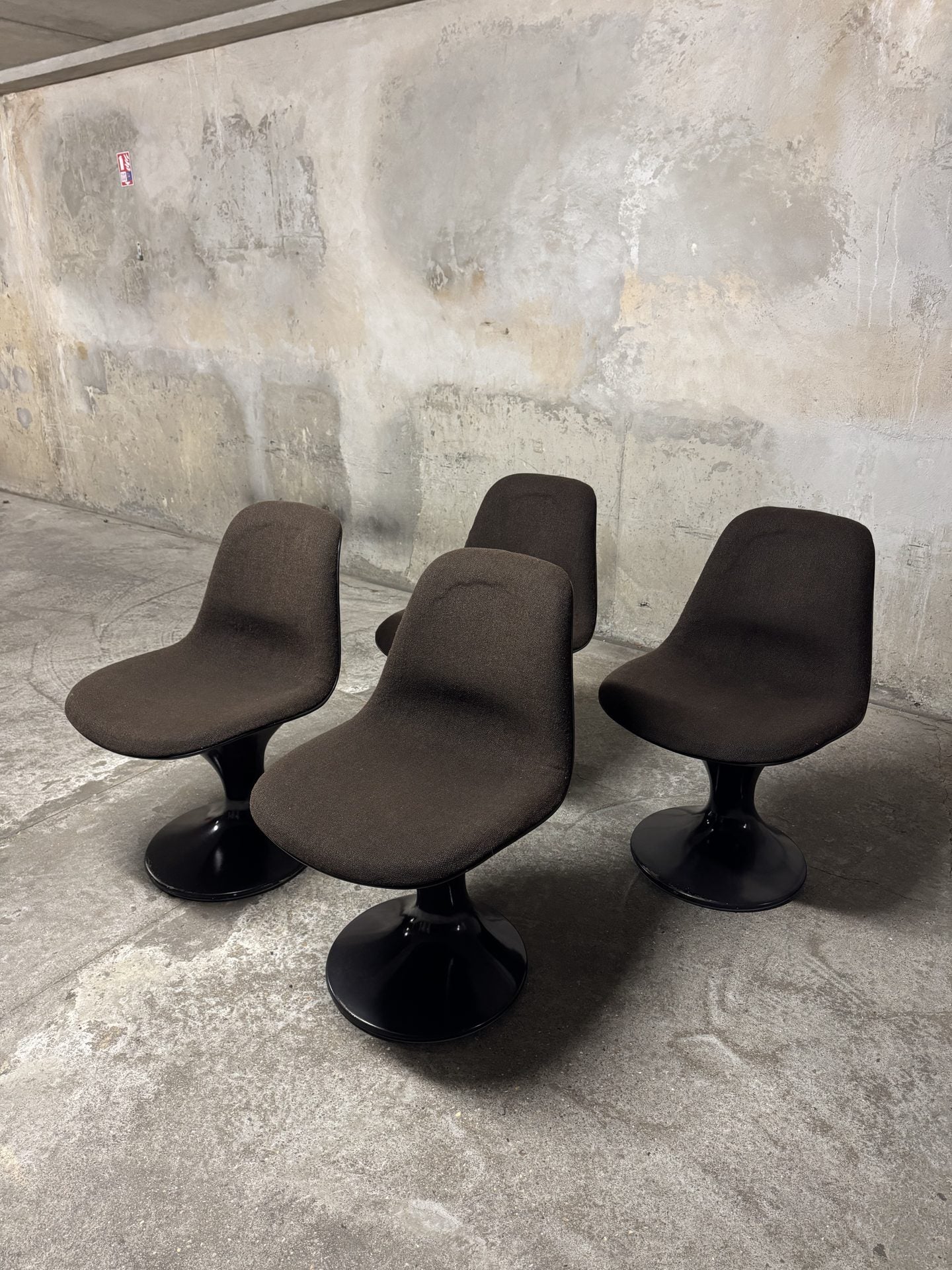
One of a kind · Authenticated · Delivery Paris · France · Europe

LAPIERRE MARKET · Gallery

About — LAPIERRE MARKET

LAPIERRE MARKET, a Paris gallery dedicated to vintage designer furniture. Sourced in France and Europe, documented authentication, delivery to Paris, EU, UK and US.

A small gallery, run by hand

LAPIERRE MARKET is a Paris gallery dedicated to twentieth-century vintage designer furniture. The project started in 2024-2025, run by a single person, with a simple objective: bring signed pieces back into circulation in a documented condition, at a clear price, with a level of attention that does not blur into a generalist marketplace.

The catalogue focuses on original editions and historical reissues from identified manufacturers. USM Haller, Ligne Roset, Cassina, Knoll, Vitra, Fritz Hansen, Artemide. Charlotte Perriand, Pierre Paulin, Mario Bellini, Achille Castiglioni, Charles and Ray Eames, Pierre Jeanneret. The scope is intentionally narrow — a body of work we can document and defend, rather than a wide catalogue where each piece would be less known. Alongside the furniture, the gallery opens a vintage tableware segment — Gien and Sarreguemines faience, Vallauris ceramics, Iittala glassware — sourced as lots from documented family estates.

The project, in a few lines

The starting point sits on three observations. The market for vintage designer furniture is more mature than it appears, but supply is dispersed between mixed antique markets, resale platforms with limited control, specialist dealers with low public access, and auction houses that intimidate the private buyer. Many pieces sold as USM, Roset or Knoll are neither, or are unauthenticated Italian-made copies. And retouched commercial photography that hides wear marks denies the buyer essential information.

LAPIERRE MARKET offers a straightforward response. Piece-by-piece sourcing across France and Europe, through channels we know. A documented authenticity check before listing. Measured restoration that conserves patina when patina is the object, and reconditions actively when use justifies it — for instance, USM frames repainted in the original RAL. Photography in the atelier under neutral spot lighting, without cosmetic retouching, where any visible flaw stays visible. A clear posted price, without hidden negotiation. Insured delivery, in France via Cocolis and partner carriers, in Europe and beyond through specialists used to signed furniture.

Nicolas Bret, founder

The project is run by Nicolas Bret, based in Paris. The work has been built over time, by accumulating concrete cases: identifying a genuine USM Haller by eye, telling apart a Ligne Roset reissue from a first-period Togo, reading a Cassina marking, recognising a Pierre Jeanneret returned from Chandigarh. That competence is built in the field, by cross-referencing catalogues raisonnés, manufacturer archives, period technical sheets and direct observation.

The editorial tone of the gallery reflects this discipline. No superlatives, no invented stories around the pieces, no artificial staging. The voice is that of a curator describing an object without over-selling it. It is a stance, and it is also a protection for the buyer: a factual narrative leaves less room for disappointment than an embellished one.

The mission: bring pieces back into circulation, properly

The mission fits in one sentence. Allow private buyers, interior architects and hospitality professionals to acquire vintage designer furniture without having to become specialists themselves.

In practice, this means five commitments. Verify authenticity before listing, and decline pieces whose provenance cannot be documented. Describe the actual condition without cosmetic gloss, with photographs of the wear marks. Restore with restraint, prioritising conservation over a like-new finish. Display a clear price that includes the gallery margin and is not negotiated online. Ship with insured transport, and remain available for after-sales follow-up.

On sourcing, the gallery works in France and across Europe. Specialist antique markets, regional auction houses, identified dealers in Italy, the Netherlands, Belgium, Germany and the United Kingdom, private sellers via the buyback program, collector destocking. The full process is on our sourcing page. The aim is not volume but coherence of the catalogue: pieces we understand, document and can defend in front of a demanding buyer.

Aesthetic philosophy: raw-minimalist, no luxury pose

The gallery sits in a raw-minimalist register, with visual references such as USM brand spaces, Galerie Paradis, Sonja Van Duelmen, Daniela Aristizabal and Galerie Boketto. The tone is neither pure luxury, nor sanitised Scandinavian decoration, nor picturesque vintage. It is editorial, close to a museum presenting a collection without dramatising it.

A few concrete principles follow from this stance. No greenwashing: the durability of vintage is a material fact, not an argument to be amplified. No luxury pose: we sell reference pieces at market prices, without a prestige mask. No invented narrative: provenance is what it is, documented when it is, stated as unknown when it is not. No cosmetic photo retouching: the piece delivered is the piece on the image.

This discipline has a short-term commercial cost — a less flattering narrative converts more slowly than a simplified promise. But it builds long-term credibility, the only currency that matters in a market where costly returns and authenticity disputes are the first signs of poor management.

The process, step by step

Every piece in the catalogue follows the same path, without shortcuts.

Sourcing. Across France and Europe, through the channels described above. The buy decision rests on three criteria: traceable provenance, original or coherent patina, design-history relevance.

Verification. Cross-referencing markings, serial numbers, period technical sheets and manufacturer archives. If authenticity cannot be established, the piece is not listed, however attractive it is.

Restoration, calibrated to the piece. Nourishing dry leather, recover for collapsed seats, refixing loose elements, cleaning frames. On USM, repainting frames in the original RAL when warranted, because painted metalwork restores cleanly. On wood and upholstery, conservation-first: no tinted cover-up, no erasure of wear marks that make the object what it is.

Atelier photography. Indoor atelier under neutral spot lighting, side or frontal depending on the piece, without cosmetic retouching. Visible flaws stay visible on the image. Several views: full piece, marking detail, wear-mark detail when relevant.

Certificate of authenticity. A signed written document delivered with the piece, stating designer, edition, estimated date, identified markings and documented provenance when available.

Delivery. Transport insured at declared value. Cocolis for mainland France, specialist carriers for sensitive or oversize pieces, identified providers for Europe, the UK and the US. Single point of contact, claims handled when reported within 48 hours.

Transparency commitment

Three lines of transparency structure the commercial relationship. The posted price is the price paid: no hidden negotiation, no discount reserved for selected profiles. Flaws are stated and photographed: what the buyer sees on screen is what they receive. Delivery is insured: in case of damage on receipt, the response is documented in advance, without delay.

Transparency is not a marketing point to defend — it is the operating condition of the gallery. The vintage designer market is narrow, informed buyers talk to each other, and a poorly handled dispute damages reputation more than a sale lost to caution.

Going further

To understand the circular philosophy underlying the work, our circular economy page covers the material arguments and the measured restoration process. For interior architects, boutique hotels, signature restaurants and image productions, our dedicated trade offer is on the trade page. To see how we identify and authenticate a piece, the sourcing page describes the process in detail. For a practical authentication case, the identifying a genuine USM Haller article serves as an example.

For any question, project or piece to propose, the contact page gathers the details and a form answered within forty-eight working hours.

Frequently asked

Frequently asked.

  • Who is behind LAPIERRE MARKET?

    LAPIERRE MARKET is an independent gallery founded and run by Nicolas Bret, in Paris, since 2024-2025. Day-to-day work combines private-channel sourcing across France and Europe, authenticity verification, measured restoration and editorial photography. The structure is deliberately small, without intermediaries, to keep close knowledge of every piece sold.

  • Where are your pieces stored?

    Pieces are kept in a Paris workshop-warehouse located in north Paris, indoors, dry and temperature-controlled. The gallery is not open to the public and is not a walk-in space. For pieces physically present, pickup by arrangement remains possible with an engaged client, on a reserved slot outside the hours of a standard shop. Everything else is handled remotely, with detailed photographs and a video call when needed.

  • Why vintage rather than new furniture?

    For three reasons documented on our [circular economy](/en/pages/circular-economy) page. First, the build quality of original 1955-1990 editions is rarely matched by current reissues. Second, the piece already exists: its production carbon footprint was paid long ago. Third, premium vintage holds, sometimes appreciates, while a new catalogue piece typically loses half its value within two to three years.

  • What guarantees do you offer?

    Three written guarantees come with every piece. A signed certificate of authenticity stating designer, edition, estimated production date and identified markings. Insured transport at declared value, with cover for damage reported within 48 hours of receipt. A precise description of the actual condition with photographs: any visible flaw is documented before purchase, with no cosmetic retouching on the images.

  • Do you ship outside France?

    Yes. We regularly ship to the European Union, the United Kingdom and the United States, handling post-Brexit customs formalities, EORI registration, CN codes and compliant invoicing. Zones and rates are detailed on our [shipping page](/en/livraison). For trade projects (architects, hospitality, productions), a [dedicated page](/en/pages/pro) sets out the specific terms.

A question, a project, a sourcing brief?

Get in touch