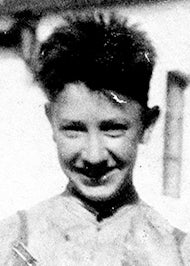
Hans J. Wegner (1914-2007)
Hans J. Wegner remains one of the Danish master-cabinetmaker designers whose corpus still structures the vintage Scandinavian furniture market today. With more than five hundred pieces signed across his career, distributed at Carl Hansen, Johannes Hansen, Getama, Fritz Hansen, PP Møbler, and Andreas Tuck, he laid the foundations of a discipline of bent wood, seagrass weaving, and traditional joinery that durably distinguishes post-war Scandinavian design. The LAPIERRE MARKET selection gathers authenticated Wegner pieces, primarily chairs and armchairs edited by Carl Hansen, with systematic mention of editor, decade, and wood.
Biographical landmarks
Hans Jørgensen Wegner was born in 1914 in Tønder, southern Denmark. The son of a shoemaker, he learned cabinetmaking as an apprentice from age fourteen. This initial manual training, completed at the Copenhagen School of Arts and Crafts between 1936 and 1938 under Orla Mølgaard-Nielsen and Kaare Klint, definitively structured his approach: for Wegner, the designer remains above all a cabinetmaker who draws for the hand, for the wood, for the joint.
From the late 1930s onward, he worked as a draftsman in the Arne Jacobsen and Erik Møller agencies in Aarhus. The encounter with master cabinetmaker Johannes Hansen in Copenhagen in 1940 opened Wegner's first major collaboration. For the Snedkerlauget (Copenhagen Cabinetmakers' Guild), the annual fair that presented signed Danish furniture between 1927 and 1966, Wegner developed with Hansen several pieces that became iconic: Round Chair JH 501 (1949), The Chair JH 503 (1949), Peacock Chair JH 550 (1947), Valet Chair PP 250 (1953).
In 1949, in parallel to the Johannes Hansen collaboration, Wegner delivered the CH24 Wishbone Chair for Carl Hansen & Søn. This chair, designed from studies of the traditional Chinese chair, progressively became the most widely distributed Wegner piece in the world. Carl Hansen also editions the CH25 (1950), the CH07 Shell Chair (1963), the CH33, the CH37, and several tables. This Carl Hansen collaboration remains the longest and densest in the Wegner catalogue.
Other editors structure his corpus. Getama editions his GE sofas and armchairs (GE 290 Plank Sofa, GE 240). PP Møbler from the 1990s onward editions several pieces transferred from Johannes Hansen (PP501 The Chair, PP19 Papa Bear Chair, PP240). Andreas Tuck editions his AT tables. Fritz Hansen editions the CH27 and several stackable chairs. This multi-editor distribution explains the complexity of the Wegner market and the importance of expertise by signature and model number.
Hans J. Wegner died in 2007 in Copenhagen, at the age of ninety-two. He was one of the most distinguished Scandinavian designers, recipient of the Lunning Prize in 1951 and the Eckersberg Medal in 1956.
Signature pieces we source
CH24 Wishbone Chair (1949, Carl Hansen). Chair with Y-shaped bent-wood structure, woven seagrass seat. Available woods: oak, beech, ash, walnut, teak (vintage), smoked oak. The most widely distributed Wegner piece in the world, still in continuous production.
CH25 Easy Chair (1950, Carl Hansen). Low armchair with wood structure and Flag Halyard rope weaving on an open frame. Rarer and more sought after than the CH24. Smoked beech or aged oak recommended in vintage form.
CH07 Shell Chair (1963, Carl Hansen). Low tripod-shell armchair, two curved legs and one rear leg, upholstered shell. Limited 1963 edition rediscovered and reintroduced by Carl Hansen in the 1990s.
CH37 (1959, Carl Hansen). Chair with wood structure and woven straw seat, simpler than the CH24. Less iconic but authentic Wegner signature.
The Chair JH 503 / PP501 (1949, Johannes Hansen then PP Møbler). The most iconic piece of all, used during the Kennedy-Nixon debate of 1960. Sculpted wood structure and woven seat. Very high quotation in vintage Johannes Hansen form.
Papa Bear Chair PP19 (1951, AP Stolen then PP Møbler). Enveloping armchair with upholstered structure and wood armrests. A collector piece, first edited by AP Stolen, transferred to PP Møbler. High quotation.
Round Chair JH 501 (1949, Johannes Hansen). The Round Chair, with bent-wood structure and straw or leather seat. Iconic piece, considered by Wegner himself to be one of his most accomplished.
GE 290 Plank Sofa (1953, Getama). Wood and cushion sofa with clear structural language. Classic Scandinavian living-room piece. Available in several configurations (two-seater, three-seater, matching armchair).
Authentic vs reissue vs homage
The Wegner market separates three levels by editor. The vintage piece stamped by its original editor (Carl Hansen, Johannes Hansen, Getama, AP Stolen, Andreas Tuck) with dating by stamp typology. Highest quotation. The reissue by PP Møbler from the 1990s onward on pieces transferred from Johannes Hansen, marked explicitly PP Møbler with PP model number. Intermediate quotation but authenticity preserved. The unauthorised copy, sold online without stamp, with visible industrial joinery, plastic weaving instead of natural Danish seagrass. LAPIERRE MARKET never lists copies; every piece listed carries its verified editor stamp.
LAPIERRE MARKET process for Hans Wegner pieces
Three stages structure expertise. Identification of the editor via the branded or engraved stamp (Carl Hansen, Johannes Hansen, Getama, PP Møbler, AP Stolen, Andreas Tuck, Fritz Hansen). Dating by stamp typology and by wood (Burmese teak = before 1985, identifiable smoked oak, patinated beech). Physical inspection of joinery, seagrass weaving, and patina. Detailed photographic documentation of each marking and sign of use.
Request a Hans Wegner piece
For a specific search (set of six CH24 in aged oak, pair of CH25 in smoked beech, vintage Johannes Hansen JH 503), write to us. LAPIERRE MARKET activates its network of Scandinavian dealers and partner Danish galleries on request, on a four-to-twelve-week horizon depending on rarity.
FAQ